Air conditioner repair in the Tri-Cities
Central AC that's stopped cooling. We find out what's actually wrong, give you the price in writing, and you decide.
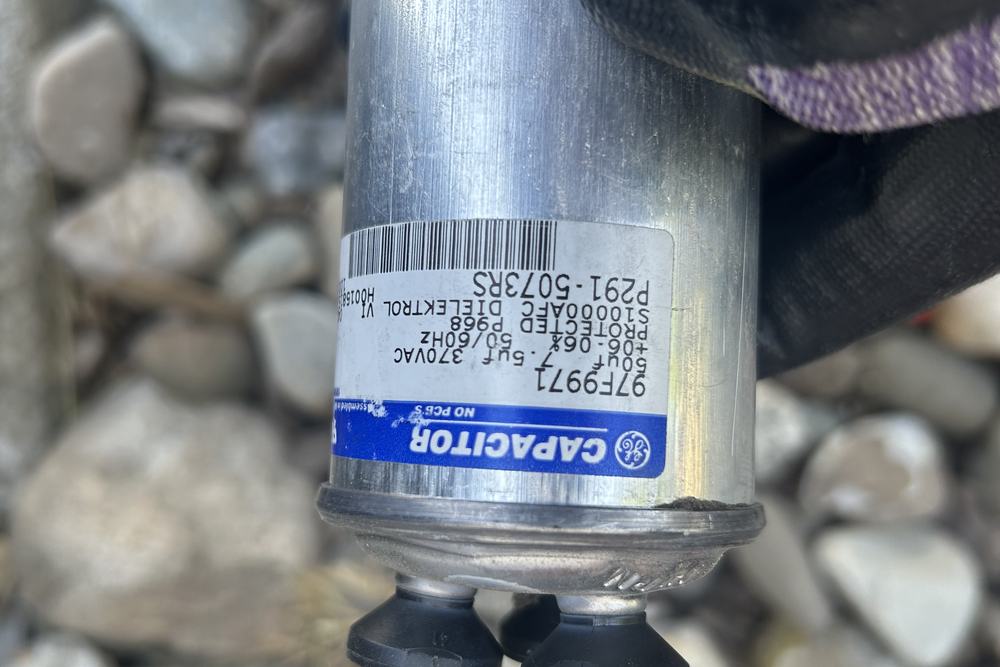
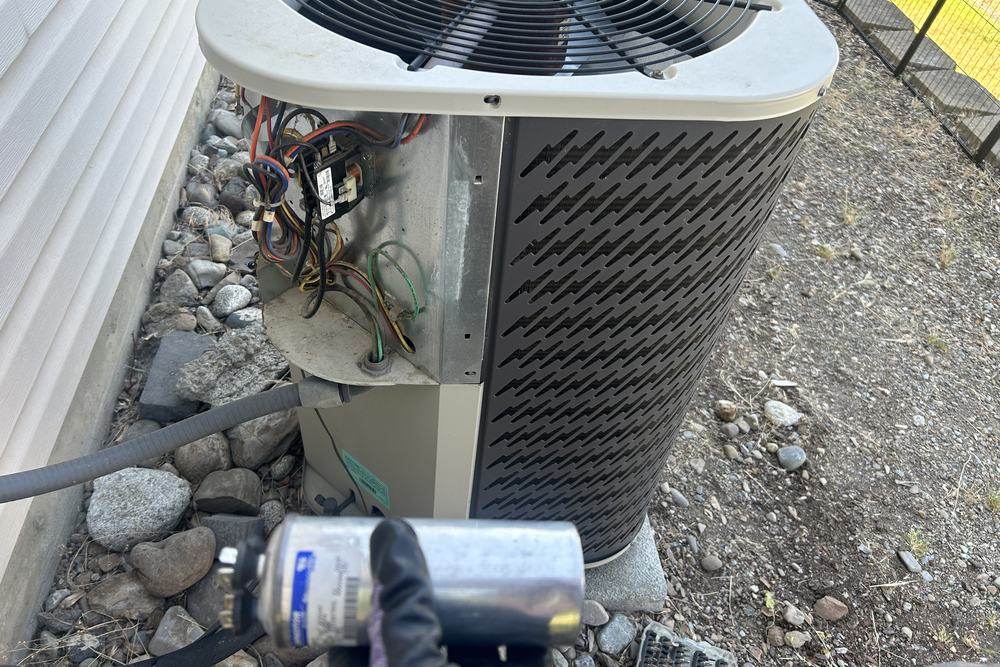
Summer in the Tri-Cities is hard on cooling equipment. A run of hundred-degree days means a condenser that was quietly limping along in June finally gives up in July, and the failures are remarkably repetitive. The most common one by a distance is a run capacitor — the metal cylinder that helps the compressor and the fan motor start. When it weakens, the outdoor fan may hum without spinning, or the whole unit trips the breaker a few seconds after it kicks on. It's an inexpensive part and a short visit.
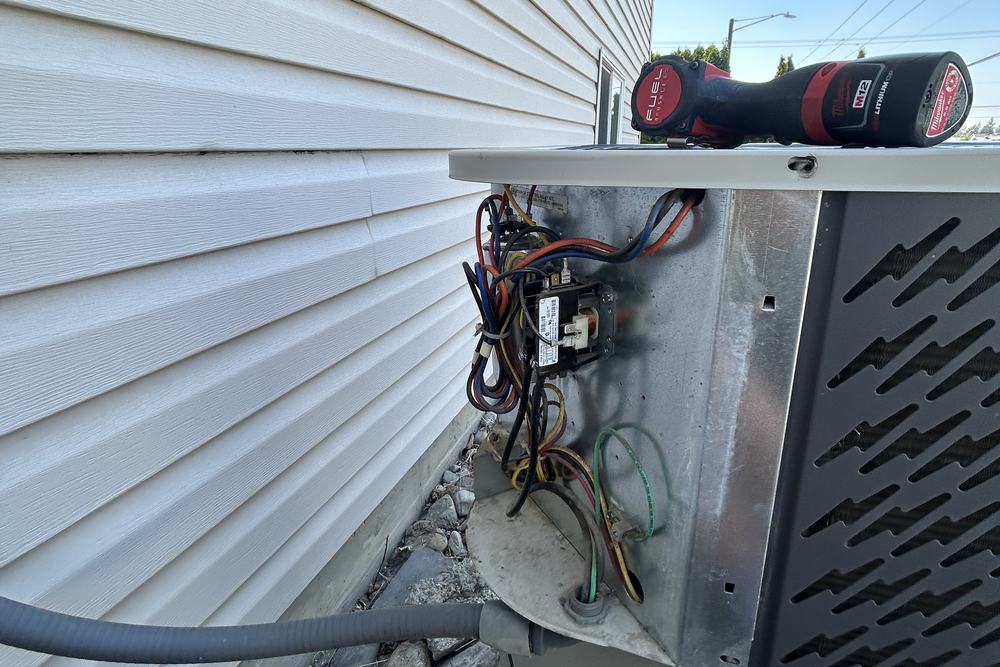
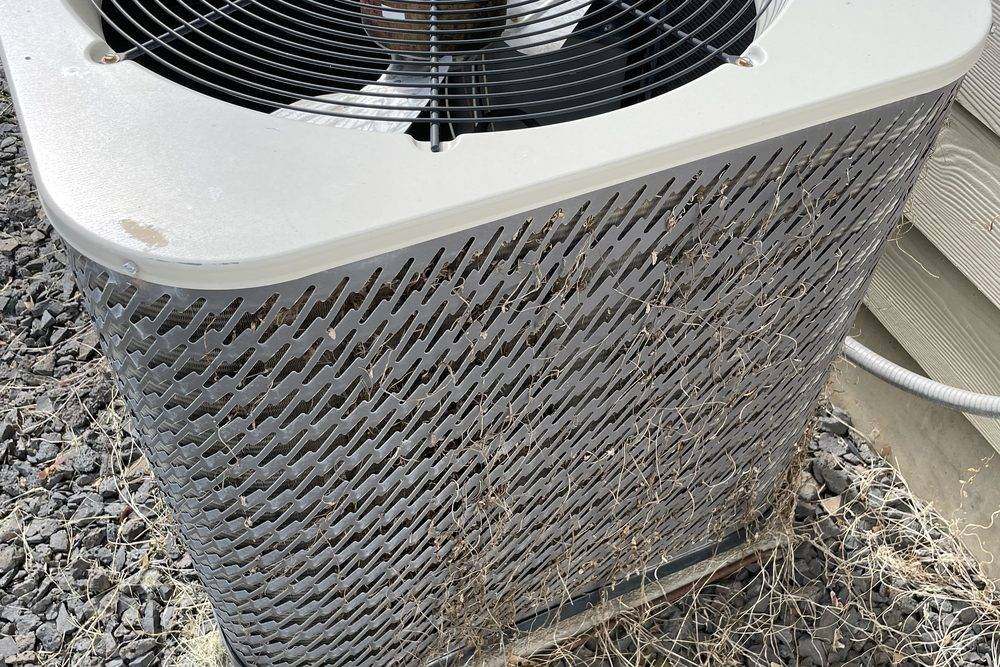
After that comes the contactor, the relay that switches the outdoor unit on and off. They pit and burn over the years, and once the contacts weld or corrode the unit either won't start at all or won't shut off. Then there are low refrigerant charges, which always mean a leak somewhere — refrigerant isn't consumed, so if it's low, it went out of the system. And there are dirty condenser coils, which are less a fault than a symptom of a unit sitting in dust and cottonwood for a decade.
Plenty of these problems look identical from the thermostat. Warm air at the vents could be a failed compressor, a plugged coil, a bad capacitor, a stuck reversing valve on a heat pump, or simply a filter nobody has changed since the house was bought. Guessing costs you money, so we don't. Gauges go on the system, we check superheat and subcooling, read amp draw on the motors, and check the temperature split across the coil before we tell you anything.
That's also how we avoid the classic upsell: adding refrigerant to a system that's low, collecting the money, and leaving the leak in place. If the charge is down we'll tell you where it's going and what it costs to fix properly. Sometimes that's a modest repair and the system runs on for years. Sometimes, on a system with a tired compressor, the honest answer is that the money is better put toward a replacement, and we'll say that too.
Where you live in the Tri-Cities changes what we expect to find before we've opened the van door. Pasco's field dust packs condenser coils until a healthy system reads like a low charge. Southridge and Finley sit in the wind and collect grit the same way. In central Richland's alphabet houses the indoor coil is boxed into a hallway closet, so access is half the job. And on West Richland's shadeless lots, capacitors cook years ahead of schedule. Same $95 call everywhere — the van just gets loaded differently.
Common air conditioner problems and what they mean
None of this replaces a proper diagnosis, but it might tell you how worried to be.
Blowing warm air
Air moves but it isn't cold. Usually charge, compressor, capacitor or a filthy coil.
Won't start at all
Nothing happens outside. Often the contactor, the capacitor, the breaker or the low-voltage side.
Trips the breaker
Runs a few seconds then cuts out. Frequently a failing compressor or a shorted motor.
Ice on the lines
Airflow starvation or low charge. Turn it off, let it thaw, and call before running it again.
Runs constantly
Never satisfies the thermostat. Undersized, undercharged, or leaking through the ducts.
Loud or rattling
Fan blade, motor bearings, or loose panels. Worth catching before it takes something else out.
AC repair parts we carry on the truck
The parts that fail most often are the ones we carry, so a lot of repairs finish the same visit.
- Run and start capacitors
- Contactors and relays
- Condenser fan motors
- Common control boards
- Refrigerant and leak-detection gear
- Thermostats and low-voltage wire
What this work looks like
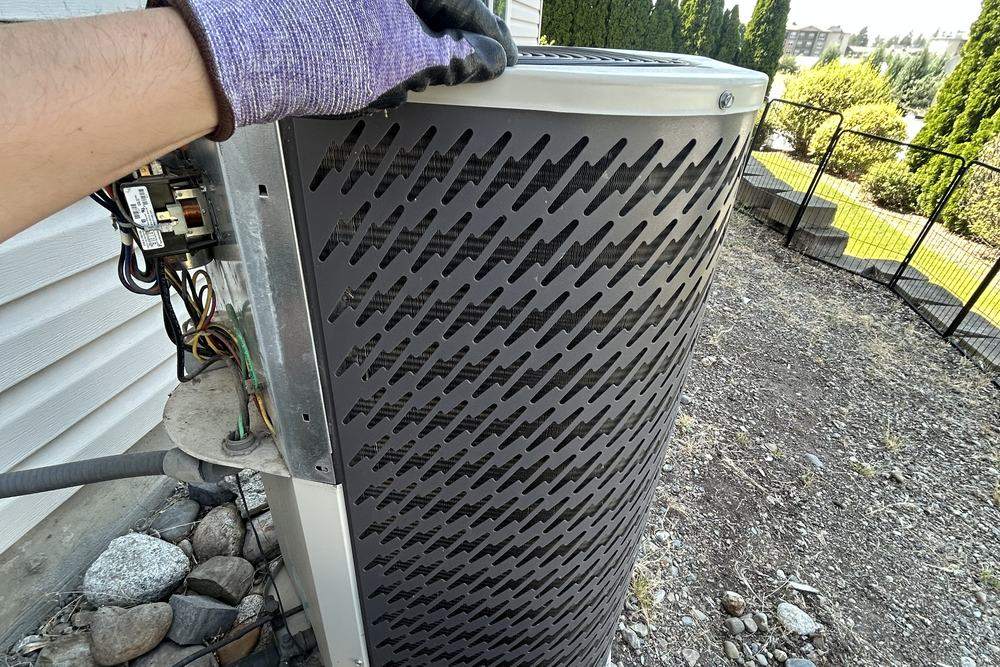
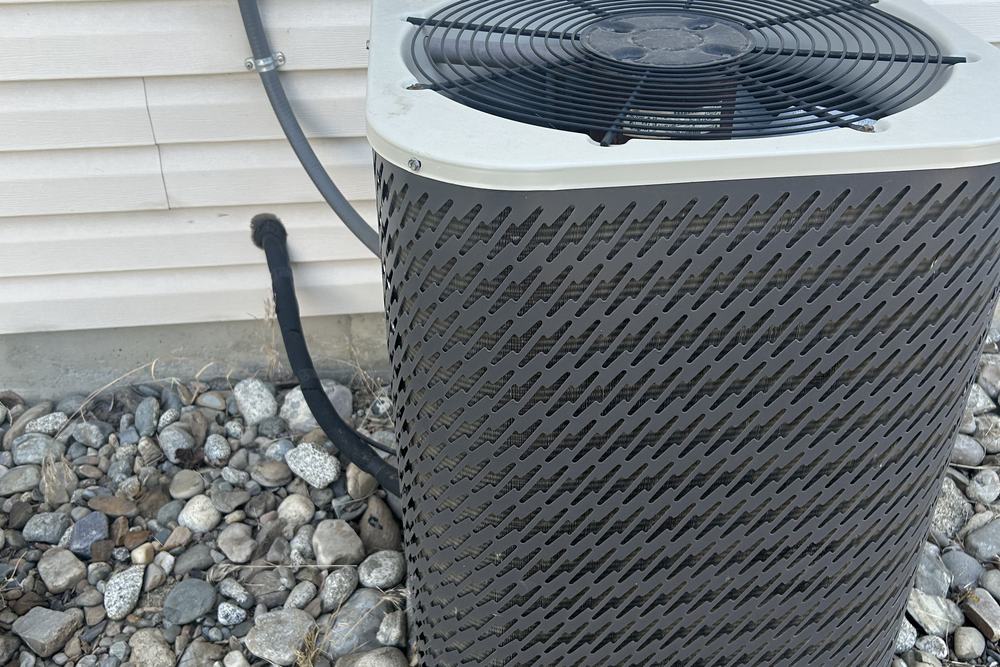
Recent air conditioner repair jobs from our own vans.
Air conditioner repair across the Tri-Cities
Each town page has the local detail.
We also come out to Benton City, Finley, Burbank and Kiona — same pricing, no travel charge.
Other heating and cooling services
Air conditioner repair — common questions
How much does air conditioner repair cost?
Our service call is $95, which covers coming out, diagnosing the fault and giving you a written price for the repair. If you go ahead with that repair on the same visit, the $95 comes off the total. The repair itself depends entirely on which part failed — a capacitor and a compressor are not remotely the same job — so we quote it once we know, rather than guessing at a number over the phone.
Why is my AC blowing warm air?
Four things cause it most often: a failed run capacitor so the compressor never starts, a low refrigerant charge from a leak, a condenser coil so dirty it can't reject heat, or a compressor that has actually failed. From inside the house they look identical, which is why we measure pressures and amp draw rather than guess.
My AC won't turn on at all. What should I check first?
Check the thermostat batteries, the breaker in the panel, and the disconnect box on the wall next to the outdoor unit — those three account for a surprising share of calls. Also check the float switch on the indoor coil if the condensate drain has backed up, because that safety shuts the whole system down on purpose.
How long does an air conditioner last in the Tri-Cities?
Twelve to eighteen years is typical here. Our summers are long and hot, which is hard on equipment, but the dry air is easier on coils than a humid climate would be. Units that get the coil cleaned and the charge checked regularly reliably reach the top of that range.
Should I repair or replace my air conditioner?
The rough rule is the cost of the repair set against the age of the unit. A small electrical part on a fifteen-year-old system is money well spent. A compressor on that same system usually isn't — you would be paying a large fraction of a new system to extend something already near the end. We give you both numbers in writing and let you decide.
Can you just add refrigerant?
We can, but on its own it's a bad deal for you. Refrigerant isn't consumed, so a low charge means it leaked out. Topping it up buys a few weeks or a season, then you pay again. We'd rather find the leak, price the proper repair, and let you weigh that against the age of the system.
Why is my AC freezing up?
Ice on the copper lines or the indoor coil is nearly always one of two things: not enough air moving across the coil, or not enough refrigerant in the system. Dirty filter, closed vents, a failing blower or a leak. Switch the system to fan-only to melt the ice before we arrive, and don't keep running it in cooling — liquid refrigerant reaching the compressor is how a cheap repair becomes an expensive one.
Do you work on heat pumps too?
Yes. A heat pump is the same equipment family with a reversing valve and defrost controls added. If yours cools fine but won't heat, that's usually where we start looking. There's a separate page on heat pump repair with more detail.