Furnace repair in the Tri-Cities
No heat, or heat that won't stay on. Gas and electric furnaces diagnosed, safety-checked and priced before anything comes apart.
A modern furnace is a chain of safety checks, and a no-heat call is usually one link in that chain refusing to close. The sequence runs roughly like this: the thermostat calls for heat, the inducer motor spins up and proves draft through a pressure switch, the igniter glows, the gas valve opens, the flame sensor confirms there really is a flame, and only then does the blower start. Break any step and the furnace shuts down on purpose.
That's why so many no-heat calls come down to small, cheap parts. A flame sensor coated in oxide can't prove the flame, so the furnace lights for four seconds and shuts off, over and over, usually three times before it locks out. A cracked hot-surface igniter never gets hot enough. A pressure switch hose full of condensate never closes. A plugged condensate trap on a high-efficiency unit backs up and locks the whole thing out. None of these are dramatic, and most are an hour's work.
Two failures change the conversation. The first is the inducer or blower motor — not catastrophic, but a real cost on an older furnace. The second is a cracked heat exchanger. That one matters because it can let combustion products into the air you breathe, and it isn't repairable; the furnace gets shut down and replaced. We check it on every heating call, and if we ever find one we'll show you what we found rather than just handing you a quote.
The good news is that a cracked exchanger is uncommon on anything under fifteen years old. Most of what we see in Tri-Cities closets and basements is a furnace in the ten-to-twenty-year range that needs one small part and then runs another few seasons quite happily. If yours is past twenty and needs something major, we'll lay the repair cost next to a replacement quote and let you look at both.
No-heat calls sort themselves by neighborhood here. Central Richland usually means a closet furnace with eighteen inches of working room. East Pasco and the older streets of downtown Kennewick still run eighty-percent furnaces from the nineties — flame sensors, igniters and tired inducer motors. Up in Southridge or out in The Bluffs it's condensing equipment, where the fault is more often a blocked condensate trap or a pressure switch than anything actually worn out.
Common furnace problems we get called about
Lights, then shuts off
Runs four or five seconds and quits, often three times before locking out. Classic flame sensor.
No ignition at all
Inducer runs but nothing lights. Igniter, gas valve, pressure switch or control board.
Blower never stops
Air keeps moving with no heat in it. Usually a limit switch, a relay, or the fan set to ON.
Cold air from the vents
The furnace is calling but not firing, or the blower starts far too early in the sequence.
Banging on start-up
Delayed ignition — gas building before it lights. Get it looked at rather than living with it.
Burning smell
Dust on the first fire of the season is normal. A persistent smell after that isn't.
The furnace safety check on every heating call
Whatever we came out for, we look at the combustion side before we leave.
- Heat exchanger inspected for cracks
- Flame pattern and burner condition
- Draft proved through the pressure switch
- Vent pipe checked for corrosion and slope
- Gas connections checked for leaks
- Limit switches and safeties tested
What this work looks like
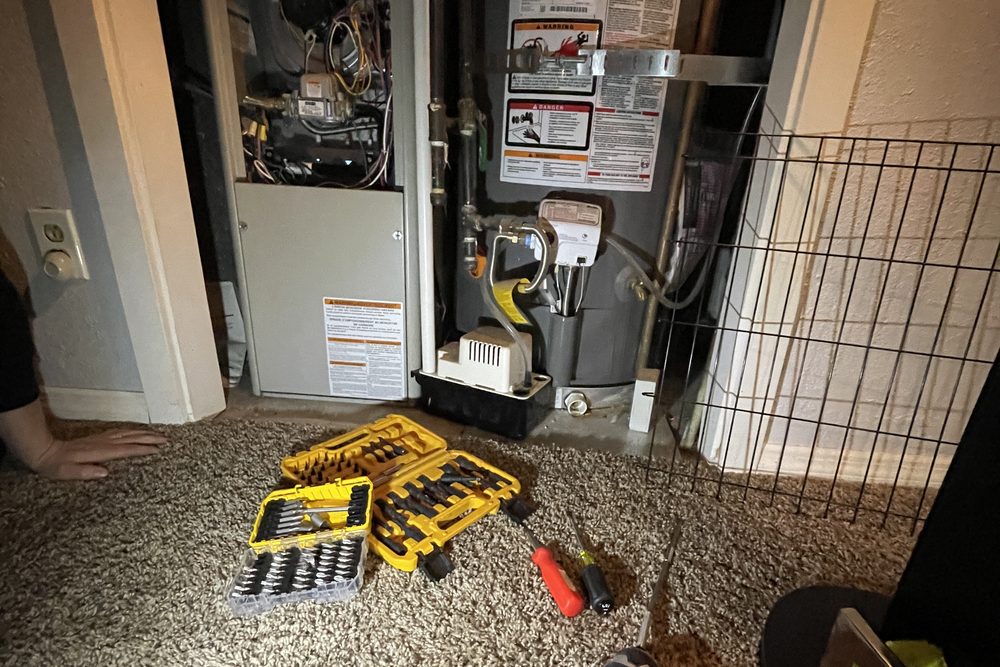
Recent furnace repair jobs from our own vans.
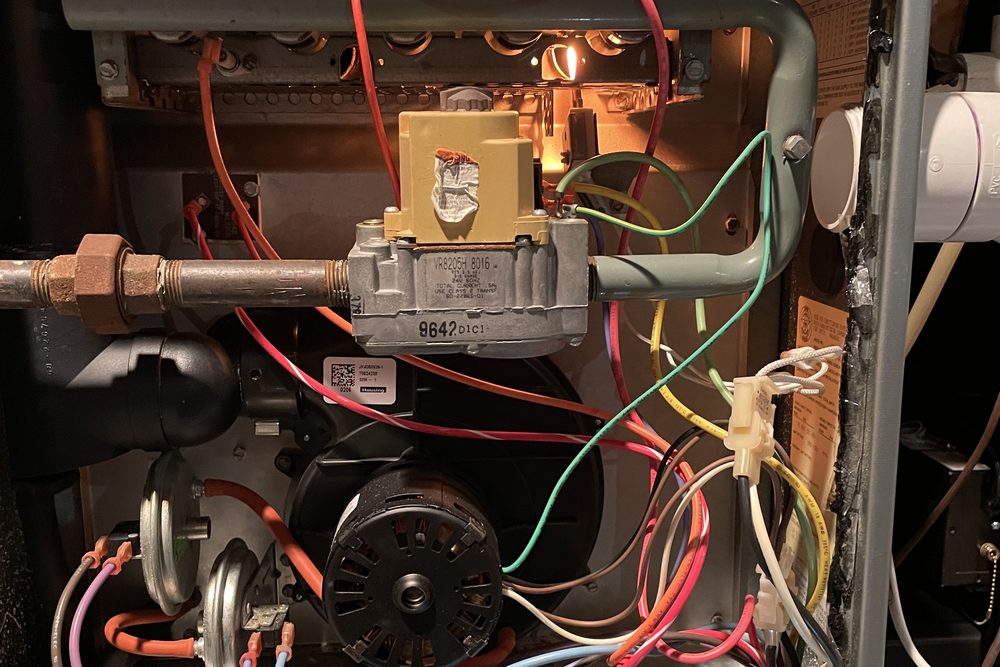
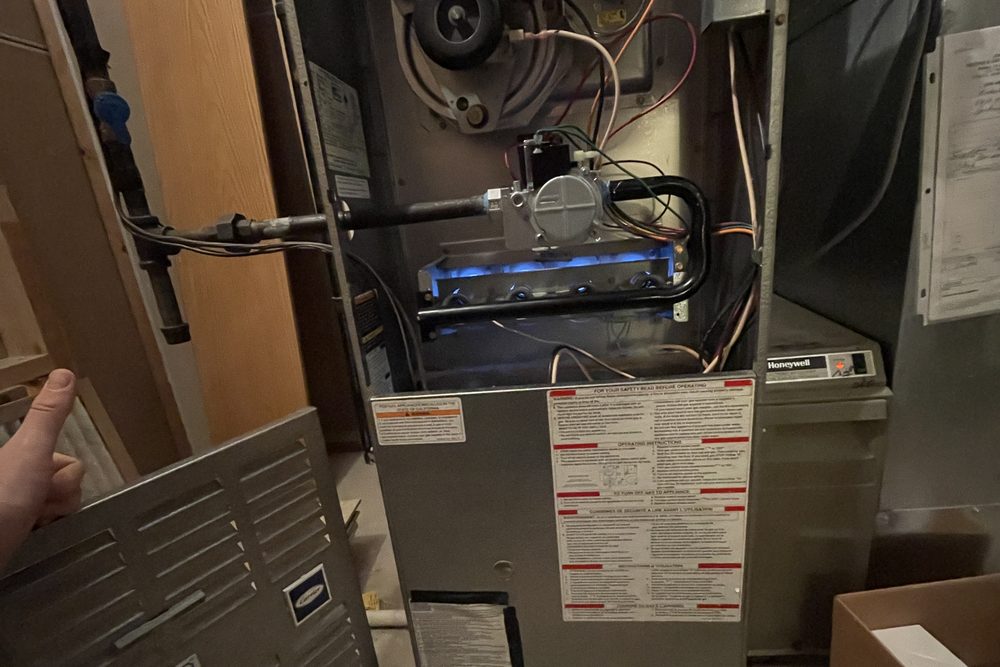
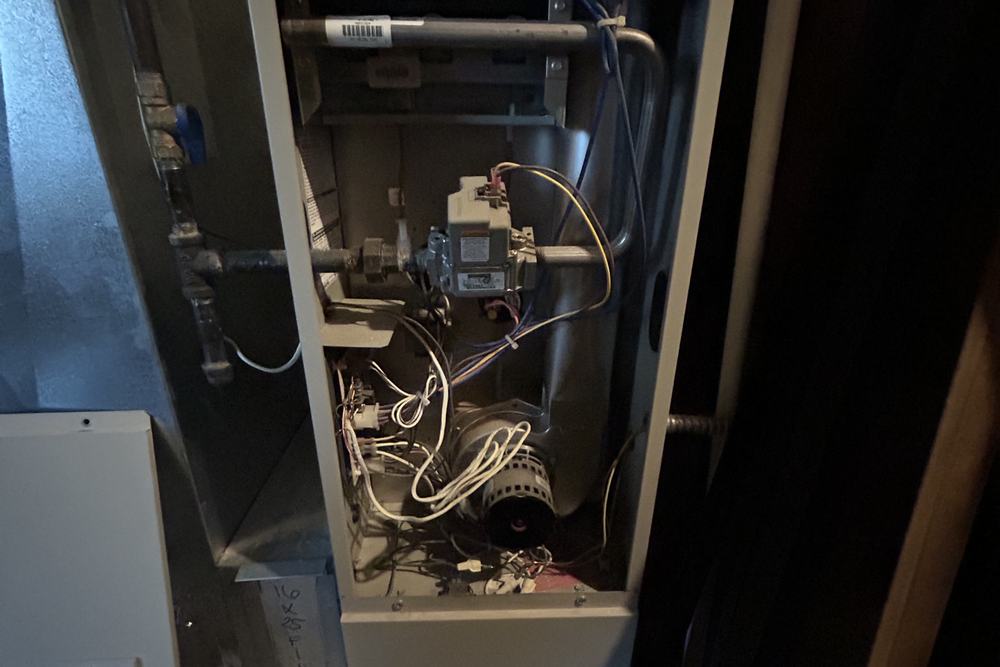
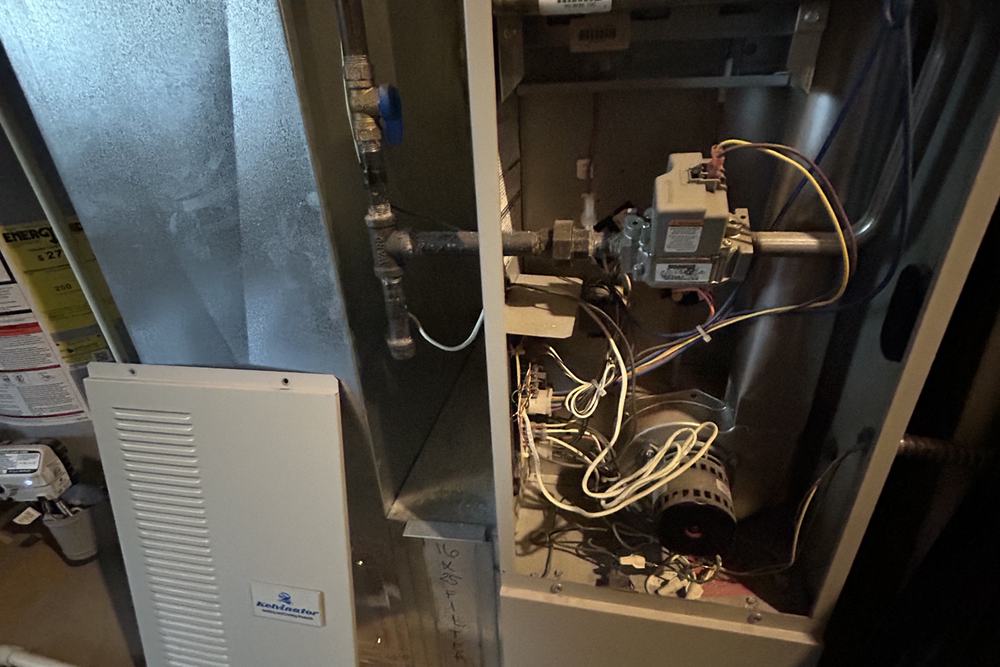
Furnace repair across the Tri-Cities
Each town page has the local detail.
We also come out to Benton City, Finley, Burbank and Kiona — same pricing, no travel charge.
Other heating and cooling services
Furnace repair — common questions
How much does furnace repair cost?
The service call is $95 and includes the diagnosis, a safety check and a written price for the repair, and that $95 comes off the repair if you go ahead the same visit. What the repair costs depends on the part — a flame sensor is at one end of the scale and a gas valve or a control board at the other — so we price it once we know which one it is.
Why does my furnace turn on then shut off after a few seconds?
That pattern — ignites, runs four or five seconds, shuts down, tries again, then locks out — is the textbook symptom of a dirty or failed flame sensor. The furnace lights correctly but can't prove the flame is there, so it shuts the gas off as a safety measure. It's one of the cheapest repairs there is.
Why is my furnace blowing cold air?
Either the furnace is calling for heat but never firing, or the blower is running independently of the burners. Check whether the thermostat fan setting is on ON rather than AUTO — that alone explains a fair number of calls. If it isn't that, it's usually the ignition sequence failing somewhere.
What is a cracked heat exchanger and how serious is it?
The heat exchanger is the metal wall separating the combustion gases from the air that goes into your house. A crack lets those gases mix with your indoor air, so the furnace has to be shut down. It isn't repairable — the exchanger is the core of the machine. It's uncommon under fifteen years old, and if we find one we'll show you the evidence.
How long do furnaces last?
Fifteen to twenty-five years for a gas furnace, sometimes longer. The decision point usually isn't age on its own; it's a major component failing on something already old, at which point you're likely to be back for a different component in a year or two.
My furnace smells like burning. Is that dangerous?
The first fire of the season almost always smells of burned dust, and that clears within an hour. A persistent burning smell, an electrical smell, or anything like rotten eggs is different. Rotten eggs means gas — leave the house and call the gas company first, not us.
Do you work on electric furnaces?
Yes. They're simpler — elements, sequencers, limits and a blower — and the failures are usually elements or sequencers. Same $95 diagnosis.
Should I replace my furnace and AC at the same time?
Only if both are near the end. They share the indoor coil and the blower cabinet, so doing them together saves some labor and makes matching straightforward. But if your AC has years left in it, there's no reason to throw it away because the furnace failed.